
Does Your Brain Wash Itself While You Sleep? The Evidence, and the Argument

Everyone knows sleep matters, but it has been surprisingly hard to say exactly what it does for the brain. In 2013, a study in mice offered an answer that caught the public imagination: during sleep, the brain flushes out the waste it builds up while awake. More than a decade later, that idea is both better supported in some ways and more hotly disputed in others. Here is where it stands.
The Brain Has No Ordinary Drains
Most of the body clears away waste through the lymphatic system, a network of vessels that drains fluid from tissues. The brain does not have those vessels running through it. Yet brain cells are hungry and busy, and they produce waste, including proteins such as beta-amyloid, which clumps into the plaques found in Alzheimer's disease. Something has to carry it away.
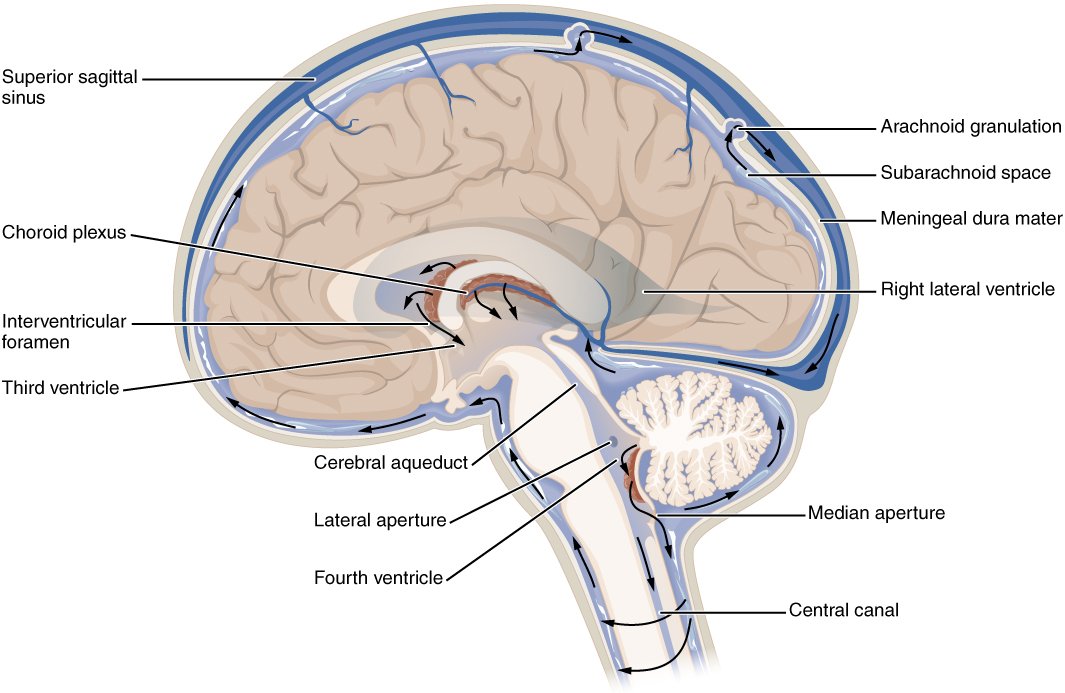
The brain and spinal cord sit in cerebrospinal fluid, a clear liquid that cushions them. In 2012, Maiken Nedergaard and colleagues at the University of Rochester described a route by which this fluid flows into the brain along the outside of blood vessels, mixes with the fluid between brain cells, and flows back out, taking waste with it. Because it is run partly by glial cells, the brain's support cells, and does the job of a lymphatic system, they called it the glymphatic system.
The 2013 Sleep Study
The following year the same group published a study in Science that tied this system to sleep. Watching the brains of living mice, they found that the space between brain cells grew by about 60 percent when the animals were asleep or under anaesthesia. With more room, fluid could move through the tissue much more freely. Beta-amyloid injected into the brain was cleared roughly twice as fast in sleeping mice as in awake ones.
The researchers suggested that this might be one of the core reasons we sleep. A brain busy with waking life may not be able to clean itself thoroughly at the same time, so it switches modes.
Evidence From Sleeping People
Mice are not people, and watching fluid inside a living human brain is hard. In 2019, a team led by Laura Lewis at Boston University, with first author Nina Fultz, used fast MRI to look at 11 people sleeping in a scanner. During deep, non-dreaming sleep they saw a repeating pattern: slow electrical waves in the brain, followed by changes in blood flow, followed by large, rhythmic pulses of cerebrospinal fluid washing in and out. Those pulses were much larger than anything seen while the same people were awake.
That does not prove waste is being cleared, but it shows that deep sleep does something dramatic to the movement of fluid around the human brain, which fits the cleaning idea.
The 2024 Challenge
Then came a study that pointed the other way. In 2024, Nicholas Franks, William Wisden and colleagues at Imperial College London published work in Nature Neuroscience using a different method to track how quickly a fluorescent dye moved out of the brains of mice. They found clearance was not faster during sleep. It was slower, by about 30 percent in sleeping mice and about 50 percent under anaesthesia, compared with mice kept awake.
Their conclusion was blunt: the results challenge the idea that the main purpose of sleep is to clear toxins from the brain. Other researchers in the field argued that the new study had technical problems and that its method did not capture the same process. Some found it convincing. The disagreement has not been settled.
What We Can Say for Now
A few things are solid. The brain does have ways of moving fluid through its tissue and carrying waste out. Deep sleep produces large, coordinated waves of fluid in human brains. And poor sleep is linked, in many studies, to worse brain health over time.
What is uncertain is whether the brain cleans itself faster during sleep, and whether that is a main reason we sleep at all. It may turn out that sleep and waste clearance are connected in ways more complicated than "the brain takes out the rubbish at night". For now, it is a good example of science in progress: a big, appealing idea, strong early evidence, and a serious challenge that the field is still working through.
Sources and Credit
- "Brain may flush out toxins during sleep," ScienceDaily (NIH-funded study), on Xie et al. in Science (2013). sciencedaily.com
- "Deep Sleep Gives Your Brain a Deep Clean," Scientific American, on Fultz et al. in Science (2019). scientificamerican.com
- "Scientists find sleep may not clear brain toxins as previously thought," UK Dementia Research Institute, on Miao et al. in Nature Neuroscience (2024). ukdri.ac.uk
- "Does Sleep Really Speed Clearance from the Brain?" Alzforum (2024). alzforum.org
- Featured image: Frederic Leighton’s painting Flaming June, showing a woman in an orange dress asleep, by Frederic Leighton (1895), via Wikimedia Commons, in the public domain. commons.wikimedia.org
- Image: Diagram of the brain showing how cerebrospinal fluid circulates around and through it, by OpenStax, via Wikimedia Commons, licensed CC BY 4.0. commons.wikimedia.org
SAYKAYZ is a publishing platform, not a publisher of record. Any dispute over authorship or attribution is between the parties involved; please see our Terms of Service.