
Try it right now. Run your own fingers along the bottom of your foot or under your arm, the exact spots that would send you into fits of laughter if someone else did it. Nothing happens. It’s not a lack of effort or a failure of imagination, it’s a basic feature of how your nervous system is wired, and it turns out to be one of the cleaner windows science has into how the brain tells the difference between you and everything that isn’t you.
The Prediction That Cancels the Feeling
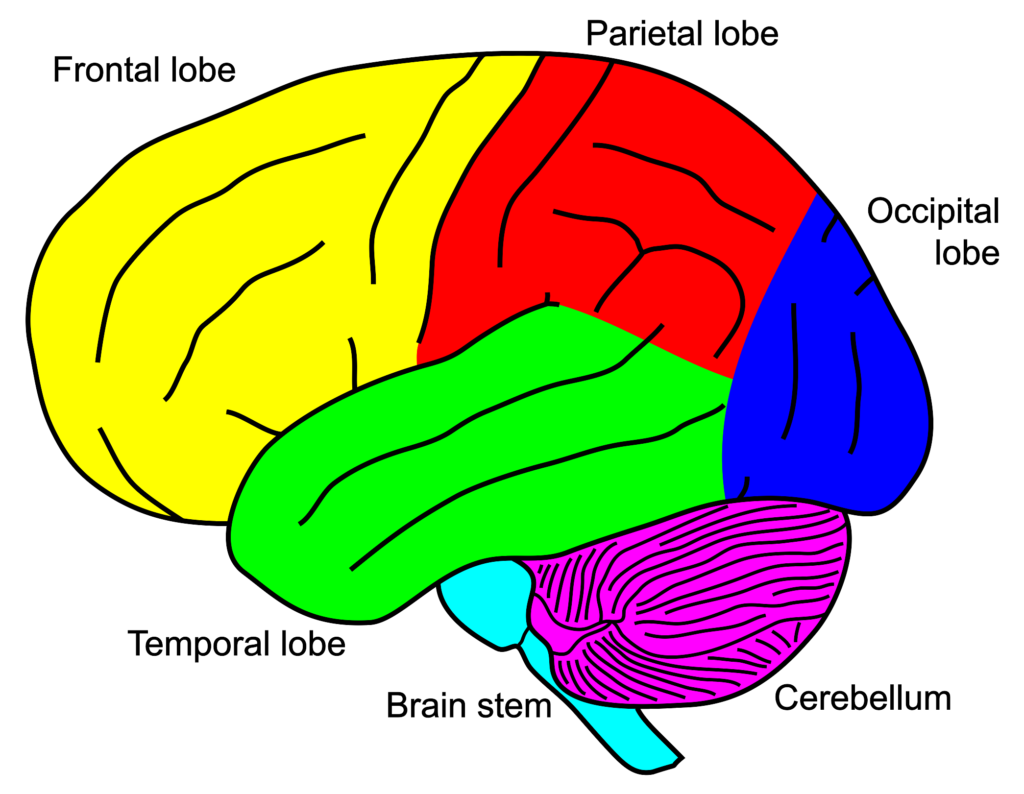
The explanation traces back to research by Sarah-Jayne Blakemore, a neuroscientist who studied this question in detail, along with Daniel Wolpert and Chris Frith. Their work points to the cerebellum, a structure at the back of the brain best known for coordinating movement, as the source of the effect. Whenever you make a voluntary movement, the cerebellum generates a prediction of exactly what sensation that movement should produce. When you move your own hand to tickle your own foot, the cerebellum knows the command that was sent and forecasts the resulting touch almost perfectly. That forecast gets used to dampen, or cancel out, the brain’s response to the actual sensation when it arrives. The tickle is real, but the brain already knew it was coming, so it doesn’t register the way an unexpected touch does.
Building a Machine to Prove It
Testing an idea like this requires breaking the connection between your intention and the sensation, and Blakemore’s team built a genuinely clever setup to do it. Volunteers used one hand to operate a robotic device that pressed a piece of foam against the palm of their other hand. Because the researchers controlled the machine, they could introduce a delay, so the foam would touch the volunteer’s palm up to two seconds after they triggered it, rather than instantly. That small gap broke the timing the cerebellum needed to predict the sensation accurately. Volunteers reported the delayed touch felt distinctly more ticklish than an immediate one, and the longer the delay, the closer the sensation felt to being tickled by someone else entirely. The prediction system doesn’t just care that you caused the touch, it needs to predict the touch at the right moment, and if that timing is off, the cancellation fails.
Why This Matters Far Beyond Tickling
This isn’t just a party trick explanation for something people already noticed as kids. The same predictive system that cancels self-generated tickle sensations is part of a much broader mechanism the brain uses to sort every incoming signal into “caused by me” or “caused by something else.” That sorting has to happen constantly and mostly unconsciously, since the alternative would be a nervous system that can’t tell its own footsteps from someone sneaking up behind it. Researchers studying schizophrenia have looked closely at this same forward-prediction machinery, since some of the more striking symptoms of the disorder, including certain kinds of hallucinations and the sense that one’s own thoughts or actions belong to someone else, have been linked to disruptions in exactly this self-versus-other prediction process. When the brain’s forecast of its own actions stops lining up correctly, self-generated signals can start getting misattributed to an external source instead. Researchers have used tools like cerebellar brain stimulation to study whether that timing and prediction process can be recalibrated, both in healthy volunteers and in people with schizophrenia spectrum disorders.
A Small Reflex With a Big Job
It’s easy to file “you can’t tickle yourself” away as a minor quirk of the nervous system, mildly interesting and not much else. But the mechanism behind it is doing something the brain absolutely cannot function without: constantly comparing what it expects from its own actions against what actually arrives, and using any mismatch as a signal worth paying attention to. A perfectly predicted touch gets filtered out as unremarkable. An unpredicted one, even from your own hand under the right conditions, gets through. That filter is quietly running every second you’re awake, deciding what counts as new information and what’s just you, being exactly as predictable as your own brain expected.
Sources & Credit
- Blakemore, S-J., Wolpert, D., Frith, C. “Why can’t you tickle yourself?” Stanford University hosted copy of the original paper. stanford.edu
- “Why can’t a person tickle himself?” Scientific American. scientificamerican.com
- “Why Can’t You Tickle Yourself?” Yale Scientific Magazine. yalescientific.org
- “Facilitation of sensorimotor temporal recalibration mechanisms by cerebellar tDCS in patients with schizophrenia spectrum disorders and healthy individuals,” Scientific Reports. nature.com
- Featured image: brain lobe diagram with cerebellum highlighted, by NEUROtiker, via Wikimedia Commons, licensed CC BY-SA 3.0. commons.wikimedia.org
SAYKAYZ is a publishing platform, not a publisher of record. Any dispute over authorship or attribution is between the parties involved; please see our Terms of Service.