
How General Anesthesia Actually Turns Off Consciousness (and Why We Still Don’t Fully Know How)
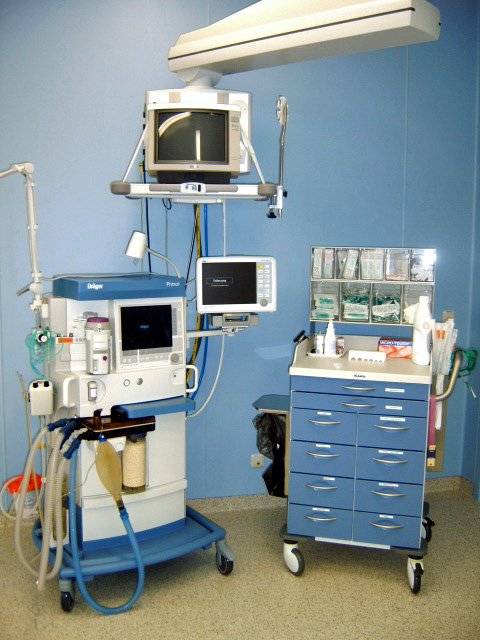
Every day, millions of people are put under general anesthesia, wheeled into an operating room, cut open, stitched back up, and wake up with no memory of any of it. It’s one of the most common medical procedures in the world, and it works reliably enough that almost nobody thinks twice about it. And yet ask an anesthesiologist to explain exactly how the drugs flip consciousness off, and the honest answer is that medicine knows an enormous amount about what these drugs do to the brain, and still doesn’t have a complete account of why that adds up to a person disappearing.
What the Drugs Actually Do
Most intravenous anesthetics, including propofol, the drug most people picture as “the milky stuff,” work mainly on a receptor called GABA-A. This is the brain’s main brake pedal, a receptor that normally responds to the neurotransmitter GABA by calming neurons down. Anesthetic drugs latch onto GABA-A receptors and lock them into a shape that lets far more calming signal through than usual, according to structural research on the receptor published by researchers including a 2020 study out of UT Southwestern. Other anesthetics, like ketamine, work differently, blocking a separate receptor called NMDA instead. Different drugs, different molecular targets, but the same rough outcome: neurons across large parts of the brain get quieted down all at once.
It’s Not Just “Turning the Volume Down”
If anesthesia only worked by making the whole brain generically quieter, you’d expect something like falling into a very deep sleep. But anesthetized brains don’t look like sleeping brains on an EEG, they look like something else entirely. Emery Brown, an anesthesiologist and neuroscientist who runs a joint research center between MIT and Massachusetts General Hospital, has spent years mapping exactly what these differences look like. His research shows that anesthetics don’t just dampen brain activity, they induce specific oscillation patterns that interfere with how different brain regions talk to each other, particularly the constant back and forth between the thalamus and the cortex that appears to be necessary for integrated conscious experience. Disrupt that communication loop and the pieces of the brain that would normally combine into a single coherent experience seem to fall out of sync with each other. Brown’s team has even shown that directly stimulating the thalamus can partially reverse propofol-induced unconsciousness in animal studies, which is about as close as neuroscience gets to flipping the switch back by hand.
The Part Nobody Has Fully Solved
Here is the uncomfortable gap: neuroscience can describe, in real molecular and electrical detail, what these drugs bind to and what patterns they produce on an EEG. What it cannot yet do is fully explain why disrupting thalamocortical communication produces the subjective disappearance of experience itself, rather than just a brain that’s technically active but effectively vacant. Consciousness researchers have proposed various frameworks for what “integration” a brain needs to support awareness, but there’s no settled, universally accepted theory that predicts, from first principles, exactly when a given level of anesthetic will extinguish a person’s experience versus merely slow them down. Anesthesiologists monitor depth of anesthesia using EEG-based indices precisely because there isn’t a cleaner, more direct measurement of consciousness itself to rely on.
When the Off Switch Doesn’t Fully Engage
This gap in understanding has a real clinical consequence: intraoperative awareness, where a patient’s brain doesn’t go all the way under despite receiving anesthesia, and they retain some memory of the procedure. It’s rare. Estimates in the general surgical population put it around 1 to 2 cases per 1,000 anesthetics, and the UK’s National Audit Project 5 found a rate closer to 1 in 19,000 when using stricter reporting methods. The risk climbs sharply in specific situations, reported as high as 1 to 1.5% in cardiac surgery and far higher in major trauma surgery, where doses have to be kept lighter because a patient’s blood pressure can’t tolerate a full dose. Anesthesiologists compensate with careful drug titration and monitoring, but the existence of awareness at all is itself evidence of how little control anyone truly has over the exact threshold at which a given brain, at a given dose, stops being present.
The Strange Position Medicine Is In
Few areas of medicine let doctors do something this safely, millions of times a year, while still admitting that the central mechanism, how physical changes in receptor activity translate into the complete absence of subjective experience, remains an open scientific question. Anesthesia isn’t sleep, and it isn’t death, and it isn’t quite anything else the brain does on its own. It’s a manufactured state that works because of decades of trial, refinement, and careful dosing, built on top of a phenomenon that science can control with impressive precision without yet being able to fully explain.
Sources & Credit
- “Study reveals how an anesthesia drug induces unconsciousness,” MIT News, Picower Institute for Learning and Memory. news.mit.edu
- “Study details how general anesthetics and ‘benzos’ act on receptors in the brain,” UT Southwestern Medical Center Newsroom. utsouthwestern.edu
- Emery N. Brown faculty profile and research summary, Picower Institute, MIT. picower.mit.edu
- “Prevention of Intraoperative Awareness in a High-Risk Surgical Population,” New England Journal of Medicine. nejm.org
- “Incidence, Associated Factors, and Behavioral Consequences of Intraoperative Awareness and Dreams During General Anesthesia Among Adult Patients,” PMC/National Institutes of Health. ncbi.nlm.nih.gov
- Featured image: an anesthesia workstation, photo via Wikimedia Commons, licensed CC BY-SA 2.5. commons.wikimedia.org
SAYKAYZ is a publishing platform, not a publisher of record. Any dispute over authorship or attribution is between the parties involved; please see our Terms of Service.