
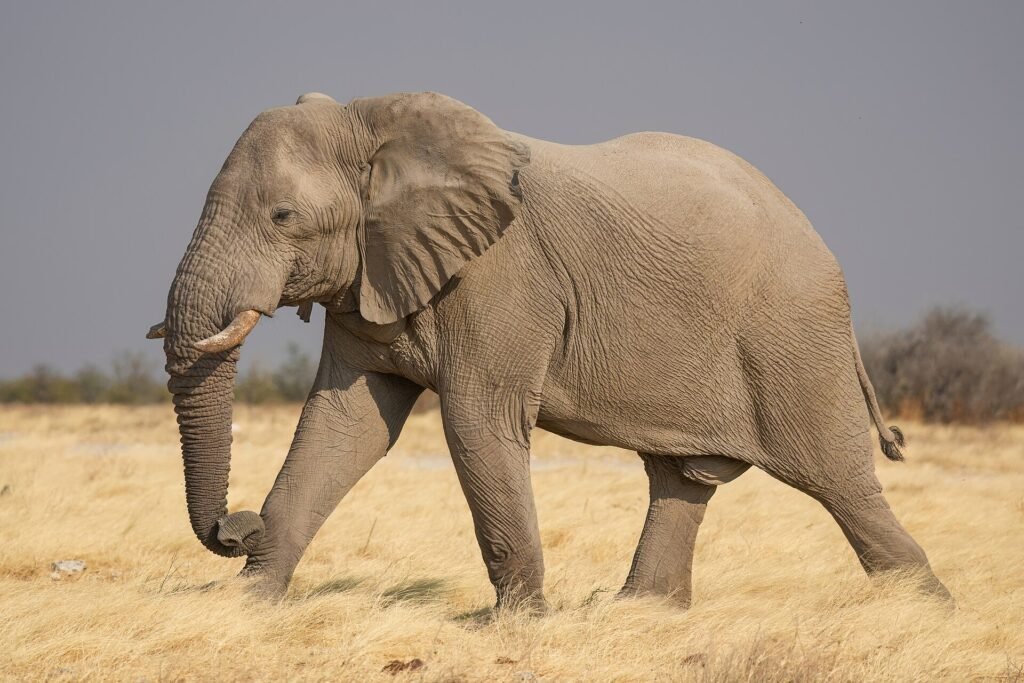
For decades the safe scientific position was that attributing grief to animals was projection, reading human emotion onto behavior that probably meant something simpler. Elephants have made that position harder to hold than it used to be. Cynthia Moss has run the Amboseli Elephant Research Project in Kenya for more than fifty years, the longest continuous study of a wild elephant population anywhere, and alongside researcher Joyce Poole has documented more than thirty distinct behaviors elephants direct specifically at their dead.
What Elephants Actually Do
The behaviors are specific enough that they’re hard to explain away as curiosity. Mothers have been observed staying beside a dead calf for days, not eating, touching the body repeatedly with their trunks. When elephants encounter the bones of a dead elephant, even old, sun-bleached ones scattered separately from any other remains, they investigate them closely with their trunks and feet, in a way they don’t investigate the bones of other species. Family groups have been recorded moving well out of their normal route specifically to pass by a site where a relative died, sometimes years earlier.
One case from the Amboseli records is often cited because it’s so specific. When a well-known matriarch named Tuskless died, her family later followed her scent trail to where her remains lay among other scattered elephant bones. They located her jawbone specifically, distinct from the other bones nearby, and spent time touching it before moving on. Distinguishing one individual’s remains from a scatter of similar bones, using scent, is not a trivial task, and it’s not obvious what purpose it would serve other than something like recognition.
The Behavior Itself Is the Evidence
Around a body, elephants typically go quiet. Vocalizations drop off, movement slows, and the group’s usual behavior patterns change noticeably, a demeanor researchers describe as closer to what would be called mourning in a person than to indifference or confusion. This is where the science has to be careful. Nobody can measure an elephant’s internal emotional state directly. What Poole and Moss have built, across five decades of continuous observation, is a documented, repeated behavioral pattern around death that doesn’t show up around, say, a sleeping elephant or an injured one that recovers. The behavior is consistently and specifically tied to death.
Why the Caution Still Matters
Careful researchers still avoid saying elephants “grieve” in the exact sense a human would, and that caution is reasonable rather than stubborn. Grief in humans comes bundled with self-awareness, an understanding of mortality, and a specific emotional narrative, and there’s no way to confirm an elephant experiences any of that internally. What the Amboseli research supports is narrower and still remarkable: a clear, consistent, elephant-specific behavioral response to death that persists across individuals, herds, and decades, distinct from how elephants respond to anything else in their environment. Whatever is happening inside an elephant standing over a dead relative’s bones, it isn’t nothing.
Sources and Credit
- Amboseli Elephant Research Project, ongoing research led by Cynthia Moss since 1972. elephanttrust.org
- Poole, J. “When Elephants Mourn,” documented elephant behaviors around death and mortality. ElephantVoices. elephantvoices.org
- Background summary, Wikipedia entry on Cynthia Moss. en.wikipedia.org
SAYKAYZ is a publishing platform, not a publisher of record. Any dispute over authorship or attribution is between the parties involved; please see our Terms of Service.