
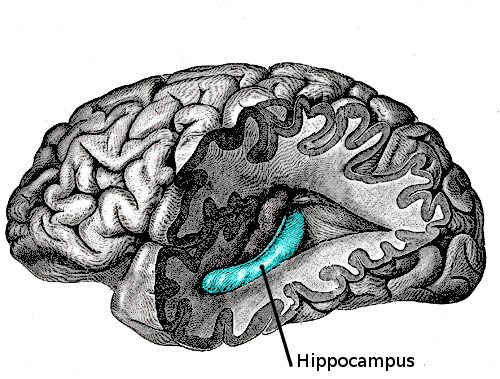
Most people treat memory like a recording. You store an event once, and from then on you can play it back, slightly faded maybe, but basically intact. Neuroscience has spent the last two and a half decades taking that idea apart. Every time you recall a memory, the brain doesn’t just retrieve it. It temporarily breaks it back down into an unstable state and has to rebuild it from scratch, and whatever happens during that rebuilding gets folded into the memory itself.
The Experiment That Started It
The modern version of this idea traces to Karim Nader, a postdoctoral researcher working in Joseph LeDoux’s lab at New York University in the late 1990s. Nader trained rats to fear a specific tone by pairing it with a mild shock, waited for the fear memory to fully form, then had the rats recall it. Right at the moment of recall, he infused a drug into their brains that blocks protein synthesis, the process cells use to build new proteins. If memory really worked like a fixed recording, blocking protein synthesis after the memory already existed should have done nothing. Instead, the fear memory vanished. The rats no longer froze at the tone.
Nader’s explanation was that recalling the memory had made it unstable again, effectively unwired it, and it needed fresh protein synthesis to become permanent a second time. Block that process during the reopened window, and the memory never gets re-saved. He later described it more simply: once you remember something, it stops being safely locked away and has to be restored again, the same way it was built the first time.
Why the Brain Would Do This on Purpose
At first this looks like a flaw, a security hole in how memory works. Nader’s own view is closer to the opposite: reconsolidation is probably a feature. A memory frozen the moment it’s formed would be useless for updating. Reconsolidation gives the brain a built-in window, opened every time a memory is recalled, where it can quietly edit the memory to include whatever’s happened since, without a person consciously deciding to revise anything.
Follow-up work out of McGill University, published in Nature Neuroscience in 2009, found the picture is more layered than the original rat study suggested. Very strong, intense fear memories initially resist this reconsolidation process almost entirely, as though they’re locked against tampering. But give it about a month, and those same strong memories become just as vulnerable to being altered on recall as weaker ones. The researchers traced this to specific molecular switches that control which memories stay open to editing and which stay closed, at least temporarily.
What This Means for Treating Trauma
The clinical implication got attention fast. If a traumatic memory becomes unstable every time it’s recalled, and needs to be rebuilt to stick around, then interrupting that rebuilding on purpose might weaken the memory permanently. Human studies have tested this with propranolol, an ordinary blood pressure medication that also blunts the stress hormones involved in memory consolidation. Given to someone right as they recall a traumatic memory, it can measurably soften the emotional intensity attached to that memory afterward, and the effect tends to be strongest with older memories rather than very recent ones, which fits the McGill finding that fresh, intense memories initially resist the process.
None of this means memory is unreliable in some alarming, everything-is-fake way. It means memory is a living structure rather than a filed document, revised slightly every time it’s pulled out and looked at. The version of an event you remember today isn’t the version you experienced. It’s the version you last rebuilt, carrying a little of every recollection in between.
Sources and Credit
- “Backing up your brain: McGill researchers discover how old memories are re-saved and changed,” McGill University Newsroom, 2009. mcgill.ca
- Nader, K., Schafe, G.E., LeDoux, J.E. “Fear memories require protein synthesis in the amygdala for reconsolidation after retrieval.” Nature 406, 722-726 (2000). nature.com
- “A single standard for memory: the case for reconsolidation,” Nature Reviews Neuroscience. nature.com
- PubMed retrospective, “The day I told Karim Nader, don’t do the study.” pubmed.ncbi.nlm.nih.gov
SAYKAYZ is a publishing platform, not a publisher of record. Any dispute over authorship or attribution is between the parties involved; please see our Terms of Service.