
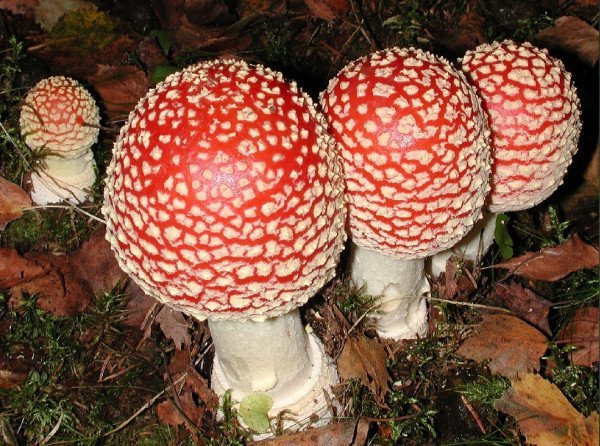
Walk into any old forest and the quiet is deceptive. Under your feet, a web of fungal threads finer than hair is stitching the root systems of hundreds of trees together. Scientists call it a mycorrhizal network, and for the last two decades it has been described, sometimes accurately and sometimes not, as the internet of the forest floor.
The idea traces back to Suzanne Simard, a forest ecology professor at the University of British Columbia who, in 1997, published research showing that carbon could move between paper birch and Douglas fir trees through shared fungal connections in the forests of western Canada. The fungi involved, called mycorrhizae, wrap around or penetrate tree roots and extend the tree’s reach into the soil far beyond what its own roots could manage alone. In exchange for sugars the tree makes through photosynthesis, the fungus delivers water and minerals, mainly phosphorus and nitrogen, that it’s better equipped to find.
The Part That’s Well Established
Nobody seriously disputes that mycorrhizal fungi trade resources with individual trees. That relationship, called mycorrhizal symbiosis, is one of the oldest and best documented partnerships in biology, dating back hundreds of millions of years to when plants first colonized land. What’s more contested is the next leap: that these fungal threads link separate trees into a genuine network, and that resources and even warning signals travel through it in any meaningful, coordinated way.
Simard’s later work leaned into this bigger claim, popularizing the term “mother trees” for large, old trees that supposedly recognize their own offspring and preferentially route carbon and water to them through the network. It’s a compelling image, and it shaped a generation of popular science writing and at least one bestselling memoir.
The Pushback
In 2023, a different group of researchers, Justine Karst, Melanie Jones, and Jason Hoeksema, published a review in Nature Ecology and Evolution that took a hard look at the evidence behind those bigger claims. Their conclusion was blunt: much of the popular narrative around common mycorrhizal networks has outrun the data. They found that claims about widespread resource transfer boosting seedling growth were built on field studies with results too inconsistent to generalize from, and that the specific claim about mother trees preferentially feeding their own offspring had no peer-reviewed evidence behind it at all. In the well-controlled experiments they reviewed, seedlings connected to a fungal network performed better than disconnected ones in fewer than one in five cases. In the rest, they did the same or worse.
This isn’t really a story about someone being wrong so much as it’s a story about how a real, interesting phenomenon can get inflated as it moves from a specialist journal into headlines and documentaries. The underlying biology, fungi connecting to multiple trees and moving some carbon between them, is real. Whether that amounts to a forest “talking” to itself, coordinating, or protecting its young the way the popular framing suggests is still an open question, and a growing number of researchers think the answer is closer to “not really, not like that.”
Why It’s Worth Knowing Either Way
None of this makes the underground world beneath a forest less remarkable. A single teaspoon of forest soil can contain miles of fungal filament, and that filament network genuinely does move carbon, water, and nutrients between organisms that would otherwise be isolated. Understanding it accurately, including where the evidence runs thin, matters for how forests are managed and replanted, especially as reforestation projects increasingly rely on the assumption that leaving certain “mother trees” standing will help new growth. If that assumption doesn’t hold up, forestry policy built on it could aim at the wrong target.
The honest version of the story is less tidy than “trees talk to each other,” but it’s still worth telling. A forest is a place where a fungus, a tree, and a chemical exchange that predates the dinosaurs quietly keep an entire ecosystem alive, whether or not anyone is listening in.
Sources and Credit
- Karst, J., Jones, M.D., Hoeksema, J.D. “Positive citation bias and overinterpreted results lead to misinformation on common mycorrhizal networks in forests.” Nature Ecology and Evolution, 2023. nature.com
- “Do trees really talk to each other through underground fungal networks?” University of Alberta Folio, 2023. ualberta.ca
- Simard, S.W. et al., research on mycorrhizal networks, University of British Columbia. Wikipedia summary
- Scientific American, “Do Trees Support Each Other through a Network of Fungi?” scientificamerican.com
SAYKAYZ is a publishing platform, not a publisher of record. Any dispute over authorship or attribution is between the parties involved; please see our Terms of Service.