
How We Found Out the Universe Is Expanding, and Why the Numbers No Longer Agree
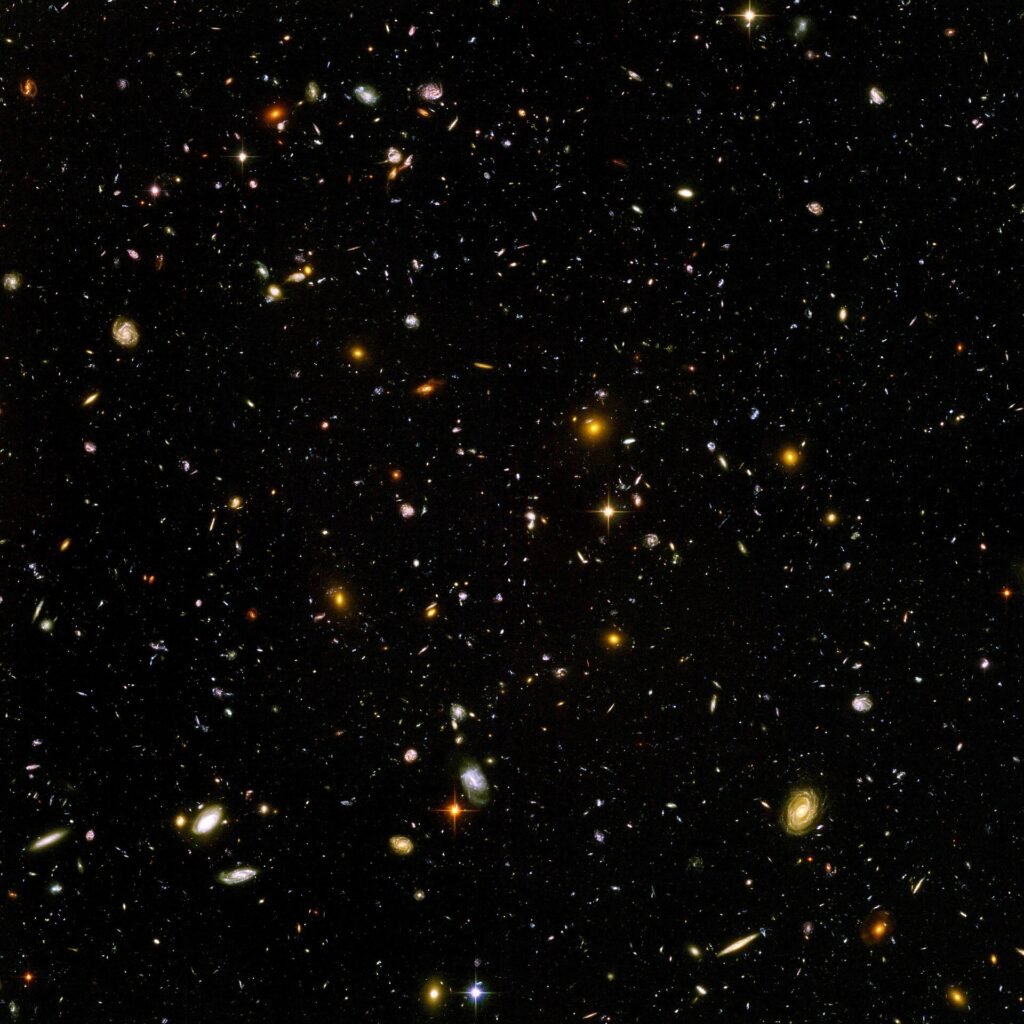
A hundred years ago, most astronomers thought the universe was more or less the Milky Way, a single great swarm of stars, sitting still. Within about a decade that picture was gone. The universe turned out to be enormous, full of other galaxies, and growing. The story of how we learned that runs through a woman counting stars on photographic plates, a Belgian priest, and an American astronomer who got most of the credit. And it is not finished, because the most precise measurements of that growth now disagree with each other.
A Way to Measure Distance
The hardest thing in astronomy is knowing how far away something is. A dim star might be faint because it is small, or because it is very far away. To measure the size of the universe, astronomers needed a star whose true brightness they knew.
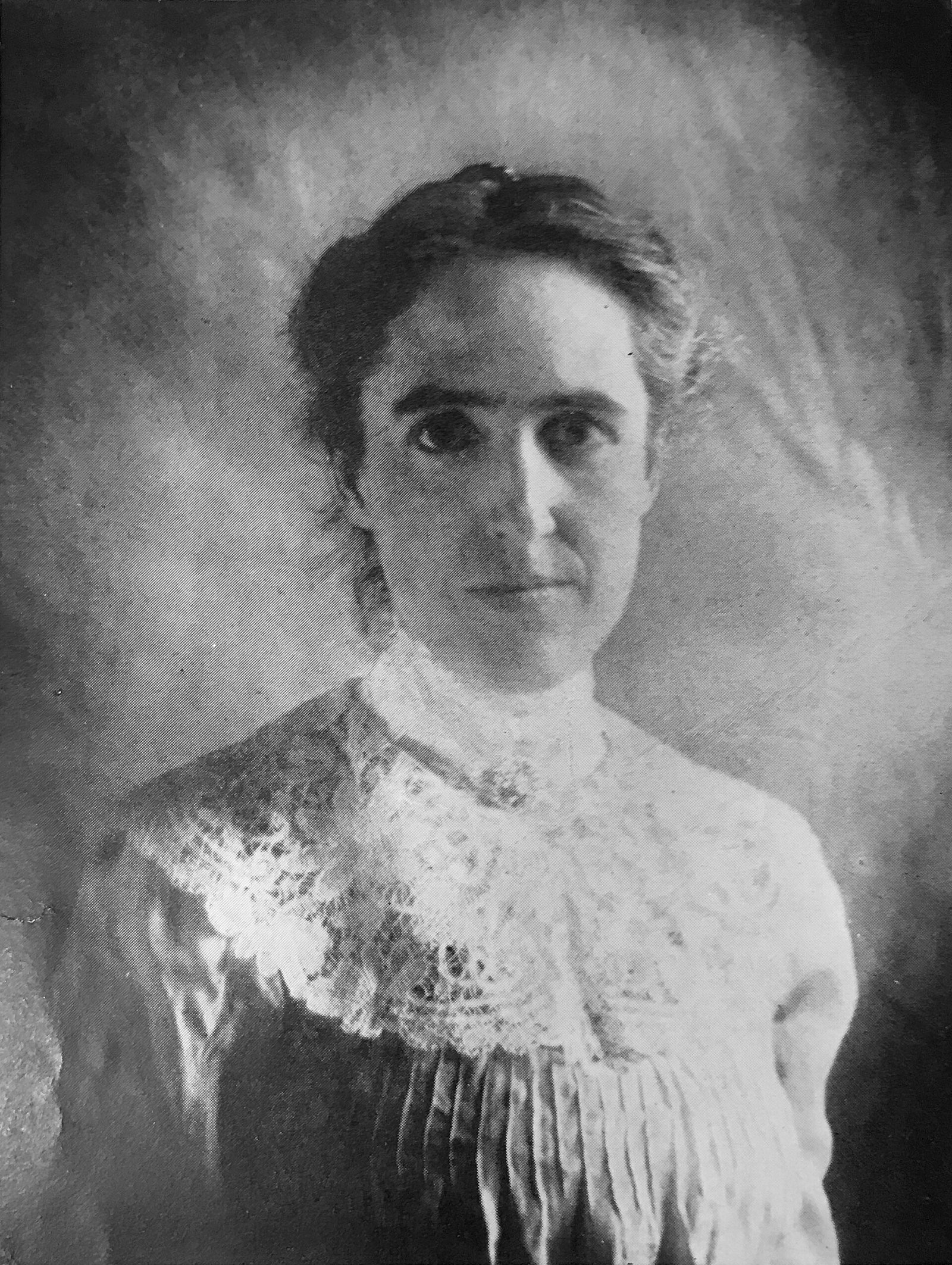
That came from Henrietta Swan Leavitt, who worked at the Harvard College Observatory as one of its "computers", women paid to examine and catalogue thousands of photographic plates of the sky. Studying a type of pulsing star called a Cepheid variable in the Small Magellanic Cloud, she noticed a pattern. The brighter the star, the longer it took to pulse. Because all the stars in that cloud are at roughly the same distance from us, this meant the length of the pulse revealed a Cepheid's true brightness. Her result appeared in 1912 in a Harvard Observatory circular issued under the name of her director, Edward Pickering, though it states that the work was hers.
That turned Cepheids into measuring sticks. Find one anywhere in the sky, time its pulse, and you know how bright it really is. Compare that with how bright it looks, and you know how far away it is.
Other Galaxies, Moving Away
In the 1920s, Edwin Hubble used the large telescope at Mount Wilson in California to find Cepheids in the faint spiral smudges then called nebulae. They turned out to be far too distant to be part of the Milky Way. The spirals were whole galaxies of their own.
Astronomers had also noticed, especially through the work of Vesto Slipher, that the light from most of these galaxies was shifted towards the red end of the spectrum, a sign that they were moving away from us. In 1929 Hubble combined distances and redshifts and showed a simple pattern: the further away a galaxy is, the faster it is receding.
Two years earlier, though, the Belgian astronomer and Catholic priest Georges Lemaître had already worked this out. In a 1927 paper written in French and published in a little-read Belgian journal, he showed that Einstein's equations allow for an expanding universe and that the expansion would make distant galaxies recede faster in proportion to their distance. His paper went largely unnoticed for years. In 2018 the International Astronomical Union voted to recommend calling the relationship the Hubble-Lemaître law, to recognise his contribution.
The Number That Will Not Settle
The rate of expansion is described by a single number, the Hubble constant, measured in kilometres per second per megaparsec (a megaparsec is about 3.26 million light-years). It tells you how much faster a galaxy recedes for every extra megaparsec of distance.
There are now two main ways to measure it, and they give different answers.
The first is the direct route, the modern version of Leavitt's and Hubble's method. Astronomers measure Cepheids, use them to calibrate brighter exploding stars called supernovae, and step out across the universe in a "distance ladder". This gives a value of about 73.
The second works backwards from the early universe. The Planck satellite mapped the faint afterglow of the Big Bang in great detail. Plugging those measurements into the standard model of cosmology and running it forward to today gives a value of about 67.4.
A difference of less than 10 percent might sound small, but both measurements are now precise enough that the gap is very unlikely to be a fluke. This disagreement is known as the Hubble tension. Many hoped the James Webb Space Telescope, with its sharper view of Cepheids, would reveal an error in the distance ladder. Instead, early Webb results broadly backed up the earlier Hubble telescope measurements.
What It Might Mean
Either one of the methods has a subtle problem nobody has found yet, or the standard picture of how the universe has evolved is missing something. Proposed explanations range from new behaviour of dark energy in the early universe to unknown particles. Nobody knows which, if any, is right.
It is a fitting continuation of the story. Leavitt's careful counting, Lemaître's overlooked paper and Hubble's measurements together changed our picture of the universe once. A stubborn disagreement over a single number may yet do it again.
Sources and Credit
- "Leavitt's Standard Candles," Astrobites (2019), on Leavitt's 1912 Harvard Observatory Circular 173. astrobites.org
- "Belgian priest recognized in Hubble-law name change," Nature (2018). nature.com
- "Hubble Law or Hubble-Lemaître Law? The IAU Resolution," arXiv (2018). arxiv.org
- "The Webb Telescope Further Deepens the Biggest Controversy in Cosmology," Quanta Magazine (2024). quantamagazine.org
- Featured image: Thousands of distant galaxies in the Hubble Ultra Deep Field, by NASA and the European Space Agency, via Wikimedia Commons, in the public domain. commons.wikimedia.org
- Image: Portrait photograph of the astronomer Henrietta Swan Leavitt, by an unknown photographer, via Wikimedia Commons, in the public domain. commons.wikimedia.org
SAYKAYZ is a publishing platform, not a publisher of record. Any dispute over authorship or attribution is between the parties involved; please see our Terms of Service.