
The Placebo Effect Is Real Biology, Even When You Know It Is a Placebo
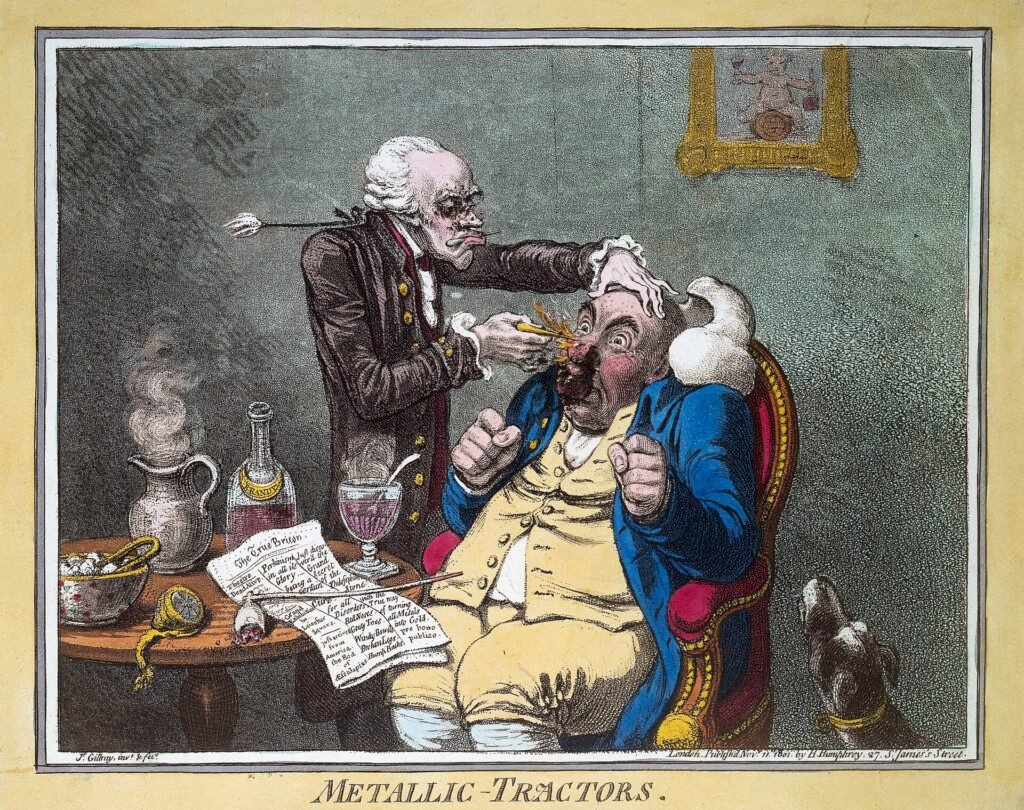
In 1799, a doctor in Bath named John Haygarth ran one of the first proper tests of a medical treatment. The treatment was a pair of metal rods called Perkins tractors, sold for a small fortune on the claim that stroking them over the body would draw disease out. Haygarth made identical-looking rods out of wood, used them on patients at the Bath and Bristol hospitals, and recorded the results. The fake wooden ones worked just as well as the expensive metal ones. Patients really did feel better. Haygarth's conclusion was that imagination alone had a powerful effect on the body.
More than two hundred years later, the word for that effect, placebo, gets used as an insult, as if feeling better from a sugar pill means the improvement was not real. The research of the last fifty years says something more interesting: the brain can produce real, measurable chemical changes in response to the expectation of treatment.
The Brain Makes Its Own Painkillers
The turning point came in 1978. Researchers Jon Levine, Newton Gordon and Howard Fields studied people who had just had wisdom teeth removed, a reliable way to produce real pain. Some patients were given a placebo and reported less pain. Then the researchers gave some of them naloxone, a drug that blocks the body's opioid receptors, the same receptors morphine works on.
For patients who had responded to the placebo, naloxone brought the pain back. For patients who had not responded, it made little difference. The simplest reading is that the placebo responders' brains had released their own opioids, the body's natural painkillers, and naloxone had blocked them. The placebo was not imaginary relief. It was a chemical event that could be switched off with a drug.
Dopamine From an Empty Injection
A study published in Science in 2001 showed something similar in Parkinson's disease, a condition caused by the loss of brain cells that make dopamine. A team at the University of British Columbia gave Parkinson's patients an injection they were told might be an active drug. In fact some received a saline placebo. Using PET scans, the researchers watched what happened inside the brain.
In the patients given the placebo, a part of the brain called the striatum released a substantial amount of dopamine, on a scale comparable to the response to apomorphine, a real dopamine drug. The effect was strongest in patients who reported feeling better. The researchers concluded that the expectation of benefit was itself triggering dopamine release, the same system that responds to anticipated rewards.
It Works Even When You Are Told
The obvious objection is that placebos need deception. Surely a sugar pill only works if you think it is medicine. In 2010, Ted Kaptchuk and colleagues at Harvard tested exactly that with 80 people who had irritable bowel syndrome, a painful gut condition with few good treatments.
Half the group received no treatment but the same friendly time with the clinicians. The other half were handed a bottle clearly labelled as placebo and told, honestly, that the pills contained no active ingredient. They were told the pills had shown benefits in studies through mind and body processes, and that they did not even need to believe in them, only to take them twice a day.
After three weeks, 59 percent of the placebo group reported adequate relief of their symptoms, compared with 35 percent of the no-treatment group. That gap is roughly the size of the improvement seen with the strongest IBS drugs of the time. Nobody was fooled, and the pills still helped.
What a Placebo Can and Cannot Do
None of this means a sugar pill can shrink a tumour or cure an infection. Placebo effects are strongest for symptoms the brain itself helps to produce or interpret, such as pain, nausea, fatigue and the discomfort of conditions like IBS. They work through the brain's own systems for managing those signals, which is exactly why naloxone could block them.
The other side is the nocebo effect, where expecting harm creates harm. People warned about a drug's side effects report more of them, even when given a dummy pill.
What Haygarth saw in 1799 turns out to be one of the clearest examples of the mind and body being a single system. The ritual of treatment, the expectation of feeling better, and the care that comes with it set off real biology. The pill is empty. The response is not.
Sources and Credit
- Levine, J.D., Gordon, N.C. and Fields, H.L. "The mechanism of placebo analgesia." The Lancet (1978). pubmed.ncbi.nlm.nih.gov
- "Parkinson's Patients Feel the Placebo Effect," Scientific American, on de la Fuente-Fernández et al. in Science (2001). scientificamerican.com
- "Placebos Work, Even Without Deception," Harvard Medical School, on Kaptchuk et al. in PLoS ONE (2010). hms.harvard.edu
- "Elisha Perkins and his metallic tractors," Hektoen International. hekint.org
- Featured image: Satirical 1801 print by James Gillray of a quack treating a patient with metal tractor rods, by James Gillray (1801), Wellcome Collection, via Wikimedia Commons, licensed CC BY 4.0. commons.wikimedia.org
SAYKAYZ is a publishing platform, not a publisher of record. Any dispute over authorship or attribution is between the parties involved; please see our Terms of Service.